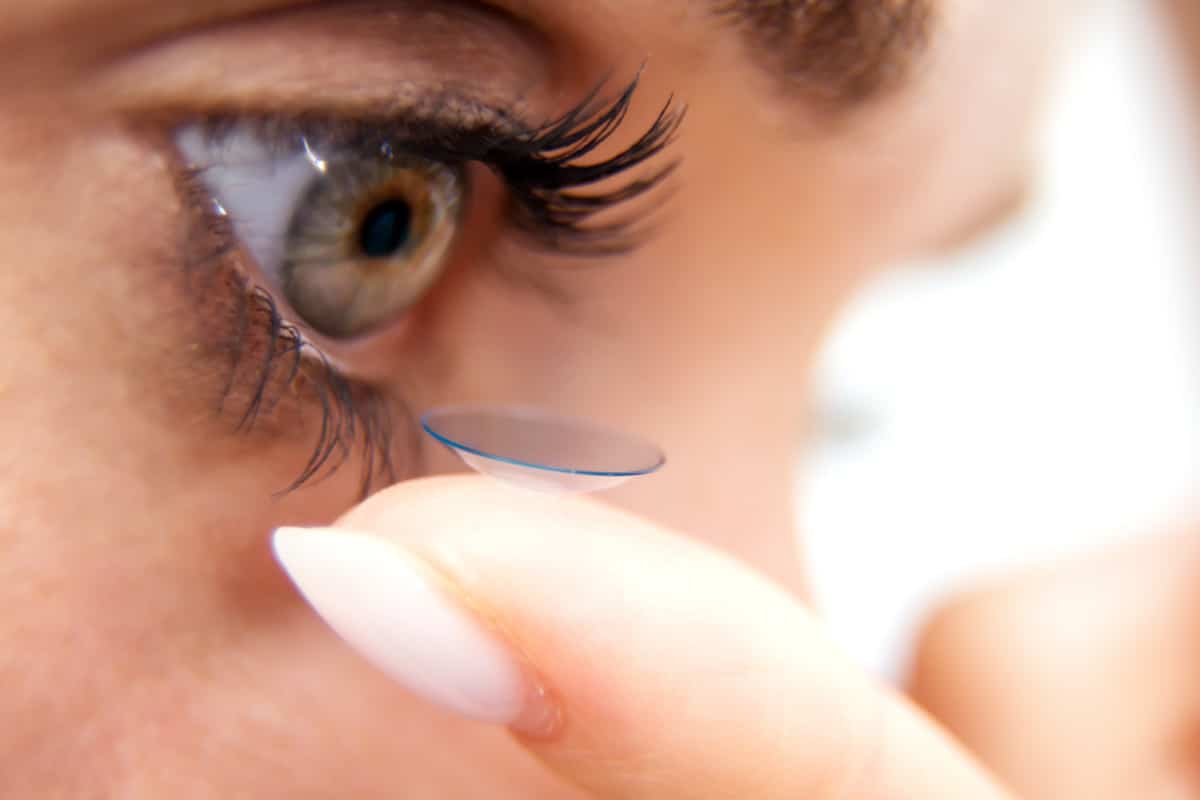

Many people rely on contact lenses for convenient vision correction. For most patients, soft lenses or smaller rigid gas-permeable lenses provide clear vision and comfortable wear throughout the day. However, certain eye conditions or complex prescriptions require more specialized solutions.
Scleral lenses are one such option. At Art of Optiks, these custom lenses are recommended when traditional contacts cannot provide adequate clarity, comfort, or ocular surface protection. Understanding how scleral lenses differ helps patients determine whether they may benefit from a consultation.
What Makes Scleral Lenses Different?
Scleral lenses are larger specialty contact lenses designed to rest on the sclera, the white part of the eye. Instead of sitting directly on the cornea like traditional contacts, they vault over it and create space between the lens and the eye.
Clinical research notes that scleral lenses vault over the cornea and maintain a fluid reservoir between the lens and ocular surface, helping protect the cornea and improve visual performance in irregular eyes.
How Scleral Lenses Sit on the Eye
Traditional contact lenses typically rest on the cornea and move slightly with each blink. Scleral lenses, by contrast, are designed to rest on the surrounding scleral tissue. This positioning avoids direct pressure on sensitive corneal surfaces.
Because the lens vaults over the cornea, it creates a stable optical environment that can improve vision for irregular eye shapes.
The Tear Reservoir “Tear Bath” Effect
The space between the lens and the cornea fills with sterile saline solution during insertion. This creates a continuous fluid layer over the ocular surface. The fluid layer can help protect the cornea and maintain hydration. For patients with ocular surface disease or severe dryness, this “tear bath” effect can provide significant comfort and therapeutic benefit.
Together, these structural differences explain why scleral lenses are often recommended when standard contacts are not sufficient.
Comparing Scleral Lenses to Traditional Contact Lenses
Several types of contact lenses are available, each designed for different visual needs. Understanding their differences helps clarify when scleral lenses may be the best option.
Soft Contact Lenses
- Flexible material that conforms to the cornea
- Comfortable for many everyday prescriptions
- May struggle to correct irregular corneal surfaces
Rigid Gas Permeable (RGP) Lenses
- Smaller rigid lenses that maintain shape
- Provide sharper optics than many soft lenses
- Move slightly with each blink
Scleral Lenses
- Larger diameter lenses resting on the sclera
- Vault over the cornea without touching it
- Maintain a fluid reservoir for hydration and protection
Each design serves a different purpose. Scleral lenses are typically reserved for cases where conventional contacts cannot deliver stable vision or comfort.
Eye Conditions That Benefit From Scleral Lenses
Scleral lenses are particularly useful for patients with complex corneal conditions or ocular surface challenges. Their unique design allows them to correct vision while protecting sensitive eye tissue.
Conditions that often benefit from scleral lenses include:
- Keratoconus
- Severe dry eye disease
- Corneal scarring
- Post-surgical corneal irregularities
- Complex or high prescriptions
Traditional contact lenses may not adequately correct the irregular surface created by these conditions. Scleral lenses provide a smooth optical surface that can significantly improve clarity.
When Doctors Recommend Scleral Lenses
Not every patient needs scleral lenses. Eye doctors typically recommend them when other contact lens options cannot provide adequate visual performance or comfort, especially for individuals over 40.
Ocular Surface Protection
Patients with severe dryness or ocular surface disease may benefit from the hydration provided by the fluid reservoir. The lens acts as a protective barrier while maintaining moisture across the cornea. This protective effect can improve both comfort and long-term ocular health.
Irregular Corneal Shape
Conditions such as keratoconus cause the cornea to become uneven. Soft lenses often conform to these irregularities, resulting in distorted vision. Scleral lenses mask these irregularities with a stable optical surface. This allows light to focus more accurately on the retina.
Complex Vision Correction
Some prescriptions involve combinations of high astigmatism, corneal irregularity, or surgical changes. Standard lenses may not provide consistent correction. Custom scleral lenses can be designed to match the eye’s exact shape. Personalization makes these lenses particularly effective for complex cases. For some patients, this improvement can be life-changing.
What Patients Should Expect During a Scleral Lens Consultation
Because scleral lenses are custom devices, the contact lens fitting process is more detailed than a routine contact lens exam. Precision measurements help ensure both comfort and visual clarity. A typical scleral lens consultation may include:
- Detailed corneal mapping and measurements
- Diagnostic lens evaluation
- Assessment of lens clearance and vault
- Custom lens design and ordering
- Follow-up visits to refine the fit
Each step helps ensure the lens aligns correctly with the eye’s structure. Customization improves both visual performance and wearing comfort. Patients should expect a more involved fitting process compared with standard contacts.
Common Adjustment Challenges for New Wearers
Scleral lenses provide significant visual benefits, but the learning process can take time. Handling techniques differ from standard contacts, particularly during insertion and removal. Common early challenges include:
- Learning insertion technique with saline solution
- Developing proper removal technique
- Adjusting to the larger lens size
- Establishing a consistent cleaning routine
Most patients adapt quickly with proper guidance. Training and follow-up visits help ensure long-term success with scleral lenses. With practice, daily handling becomes routine.
Why Choose Art of Optiks for Custom Contact Lenses
Specialty contact lenses require experience and precise fitting techniques. Proper evaluation ensures that scleral lenses deliver both clear vision and long-term ocular health. At Art of Optiks, patients benefit from:
- Advanced corneal imaging and evaluation
- Specialty contact lens consultations
- Custom lens design for irregular eye shapes
- Collaboration with specialized scleral lens manufacturers
- Personalized follow-up care to refine lens performance
Every eye is unique. A customized fitting approach helps ensure the most appropriate lens design for each patient’s needs.
Schedule a Specialty Contact Lens Consultation Today

Scleral lenses can provide clearer vision and improved comfort for patients whose eyes do not respond well to traditional contacts. Their unique design offers both optical precision and ocular surface protection.
If you struggle with conventional contact lenses or have been diagnosed with a complex corneal condition, contact Art of Optiks today to schedule a scleral lens consultation. Our team will evaluate your eyes and help determine whether custom scleral lenses are the right solution for your vision and eye health.